
The UK has introduced enhanced Ebola awareness measures at several major transport hubs as health officials respond to a growing outbreak in Central Africa.
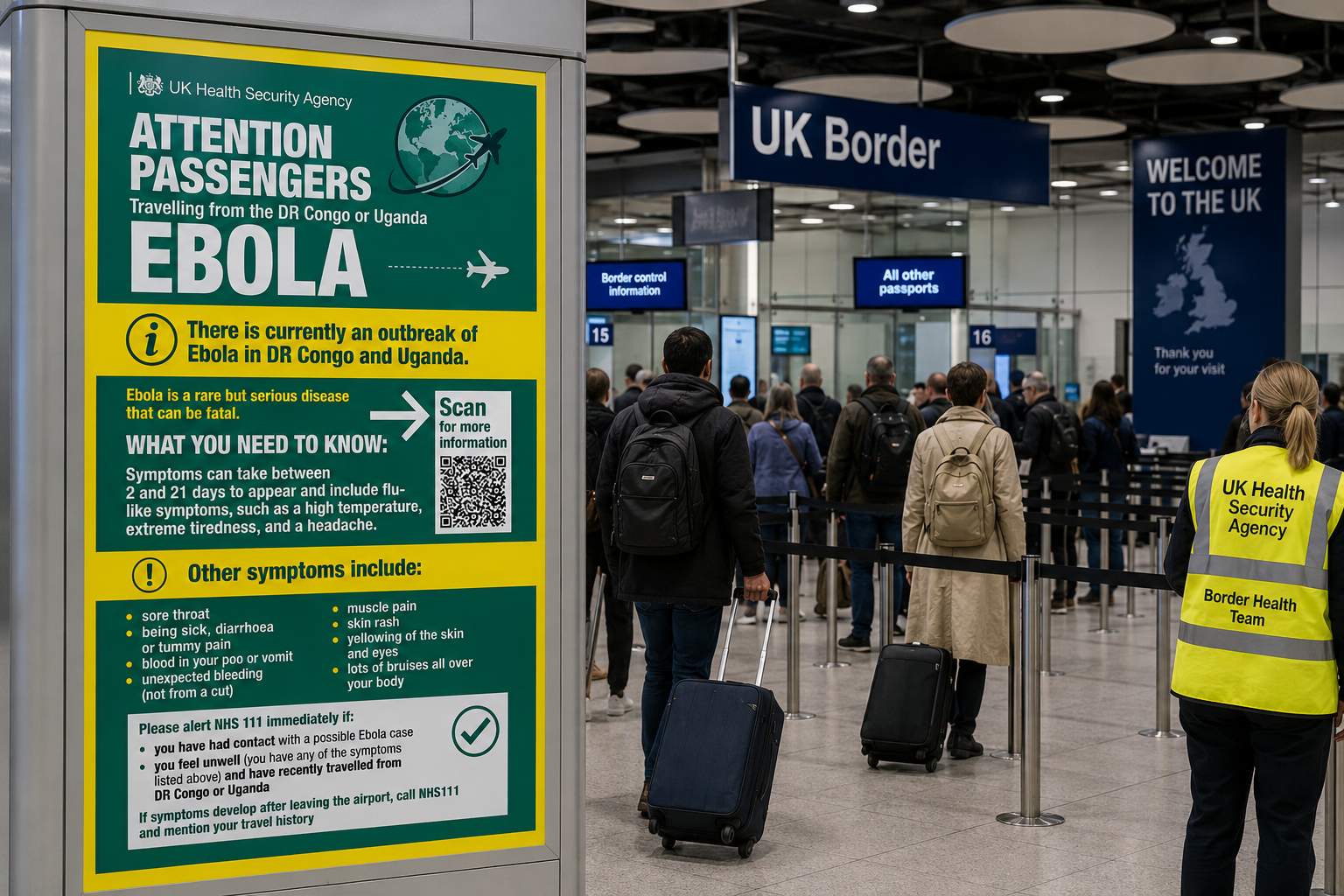
New health warning posters have been installed at Heathrow, Gatwick and Manchester airports, alongside major transport locations including Birmingham railway station and London St Pancras International. The campaign is designed to ensure travellers arriving from affected regions understand the symptoms of Ebola and know how to seek medical assistance if they become unwell after entering the UK.
The move comes as cases continue to rise in parts of Uganda and the Democratic Republic of Congo (DRC), prompting British authorities to strengthen public health messaging while maintaining that the overall risk to the UK population remains low.
Importantly for the North East, Newcastle's Royal Victoria Infirmary remains one of the country's specialist facilities prepared to respond if a confirmed Ebola case were detected in Britain.
Why The UK Is Increasing Ebola Awareness.
The latest health campaign has been coordinated by the UK Health Security Agency (UKHSA), which is encouraging passengers arriving from affected regions to remain alert to potential symptoms.
Travellers who develop signs of illness after returning to Britain are being advised to contact NHS 111 immediately and provide details of their recent travel history. Early identification is considered crucial in preventing the spread of infectious diseases and ensuring patients receive appropriate care as quickly as possible.
According to health officials, symptoms can appear anywhere between two and 21 days after exposure to the virus. Initial signs often include fever, severe fatigue and muscle pain. In more serious cases, patients may experience bruising, bleeding, stomach problems and liver-related symptoms such as yellowing of the skin and eyes.
Rather than implementing temperature screening at airports, authorities have opted to focus on targeted awareness campaigns. Experts believe that symptom-based screening combined with public education provides a more effective approach, particularly because infected individuals may not show symptoms during travel.
Newcastle's Important Role In Ebola Preparedness.
While the warning posters are concentrated at major transport hubs, Newcastle plays a significant role in Britain's infectious disease response network.
The Royal Victoria Infirmary in Newcastle is one of only a small number of hospitals in the UK equipped with specialist high-level isolation facilities capable of treating patients with dangerous infectious diseases. These units are specifically designed to manage highly contagious illnesses while protecting healthcare workers and the wider public.
Should a confirmed Ebola case emerge in the UK, patients could be transferred to one of these specialist centres for treatment and monitoring.
The presence of such facilities highlights Newcastle's importance within the nation's public health infrastructure. Over recent years, specialist teams across the city have participated in preparedness planning and training exercises designed to ensure rapid responses to emerging health threats.
For residents across Newcastle and the wider North East, health officials stress that there is currently no reason for alarm. The measures being introduced are precautionary and form part of long-established contingency plans.
Current Ebola Outbreak Continues To Grow.
The latest outbreak is centred in the Ituri region of eastern Democratic Republic of Congo.
Health authorities report that more than 320 confirmed infections have been recorded, with over 100 additional suspected cases under investigation. At least 48 deaths have been linked to the outbreak so far.
One of the key challenges facing healthcare teams is that the outbreak involves the Bundibugyo strain of Ebola, a less common variant for which no licensed vaccine or targeted treatment currently exists.
Aid organisations working in affected areas have also reported difficulties linked to ongoing regional conflict and mistrust of healthcare workers. These factors can slow efforts to identify cases, trace contacts and contain transmission.
The World Health Organization has repeatedly warned that outbreaks become harder to control when insecurity limits access to affected communities.
What Travellers Should Know.
Passengers arriving from Uganda or the Democratic Republic of Congo are being encouraged to monitor their health closely after returning to the UK.
In addition to airport posters, airlines operating routes connected to affected regions are expected to provide information during flights. Passengers feeling unwell are advised to notify cabin crew before landing so specialist health teams can assess the situation if required.
Although there are currently only a small number of direct flight connections between Uganda and Britain, indirect travel routes through European hubs mean passengers from affected areas can arrive at multiple UK airports.
Health experts emphasise that Ebola is not spread through the air like flu or Covid-19. Transmission occurs through direct contact with bodily fluids from an infected person or contaminated materials.
This means the risk to the general public remains extremely low when appropriate precautions are followed.
Lessons Learned From Previous Ebola Outbreaks.
Britain's response strategy has been shaped by lessons learned during the devastating West African Ebola outbreak between 2014 and 2016.
That epidemic resulted in more than 28,000 reported cases and over 11,000 deaths, making it the largest Ebola outbreak ever recorded. The crisis led governments around the world to review border health procedures and emergency preparedness plans.
One notable UK case involved Scottish nurse Pauline Cafferkey, who contracted Ebola while working in Sierra Leone. Despite passing through airport screening procedures, she later became seriously ill and required specialist treatment after returning to Britain.
Her case demonstrated the limitations of temperature checks and helped influence current policies that prioritise awareness, rapid diagnosis and specialist care.
The Statistics Behind Ebola.
Although Ebola outbreaks often generate concern due to the severity of the disease, they remain relatively rare compared with many other infectious illnesses.
According to data from the World Health Organization, Ebola virus disease can have a fatality rate ranging from around 25 per cent to 90 per cent depending on the outbreak and the level of medical care available. Historically, average fatality rates have been approximately 50 per cent.
The UK Health Security Agency continues to classify the current risk to the British public as low. However, authorities maintain close surveillance of global disease outbreaks to ensure any imported cases can be identified quickly.
For Newcastle residents, the existence of specialist facilities at the Royal Victoria Infirmary provides an additional layer of preparedness should infectious disease emergencies arise in the future.
Public Health Officials Remain Vigilant.
The installation of Ebola warning notices across UK transport hubs reflects a precautionary approach rather than an indication of immediate danger.
Officials say the campaign is designed to ensure travellers are informed, healthcare services remain prepared and potential cases are identified as early as possible.
As international travel continues to connect countries across the globe, Newcastle's role within Britain's specialist healthcare network remains an important part of the nation's wider strategy for responding to emerging public health threats.
What do you think about the UK's latest Ebola precautions?
Health News
Ebola Alert Issued at UK Airports as Authorities Increase Precautions
Advertisement




Comments (0)
You must be logged in to post comments.
Don't have an account? Register here
No comments yet. Be the first to share your thoughts!