
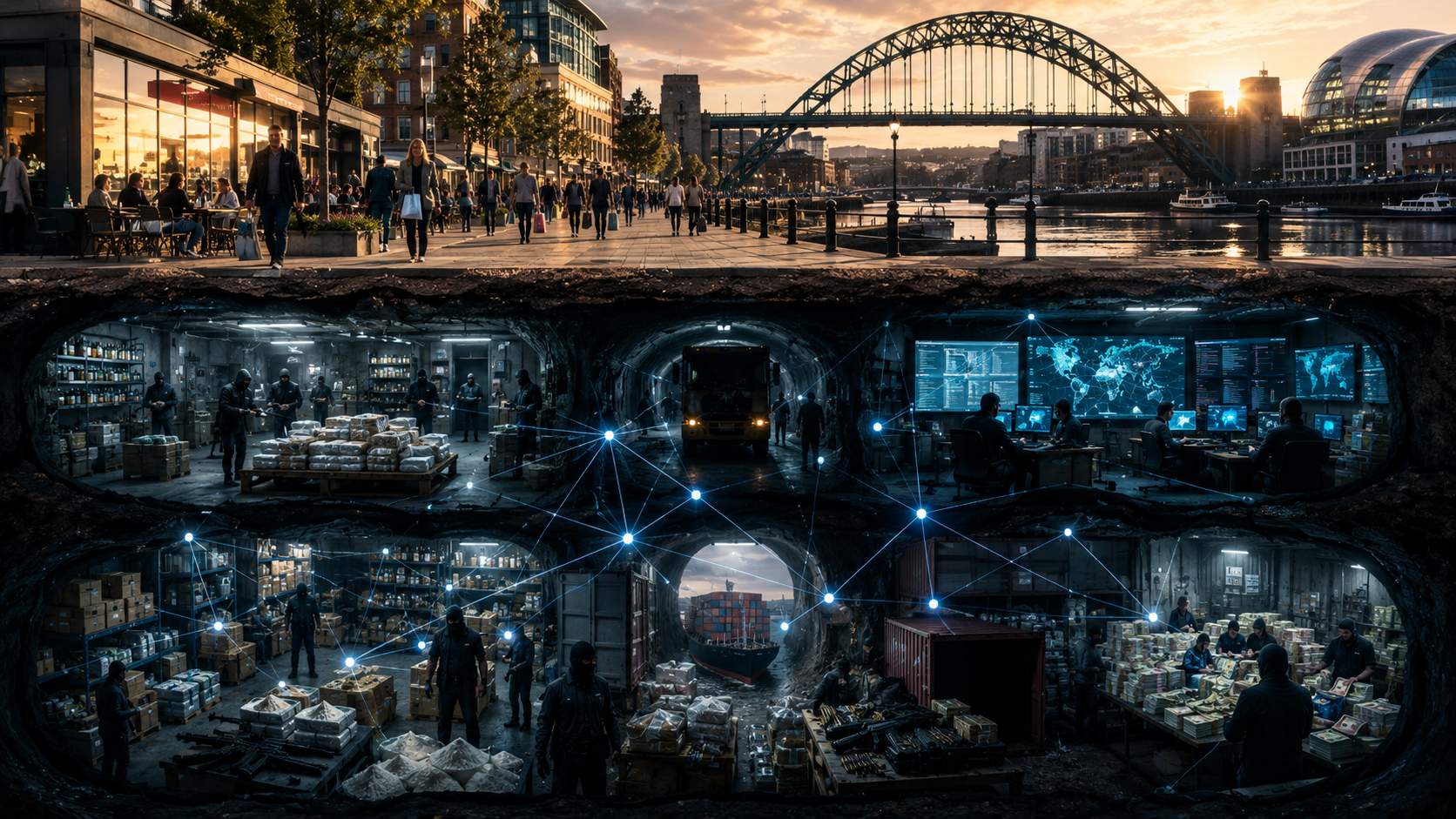
Organised crime is often portrayed as something that happens elsewhere. Images of international drug cartels, cybercriminals operating from distant countries and smuggling networks crossing oceans can feel disconnected from everyday life in Britain. Yet the reality is very different. The global criminal economy reaches into almost every country, including the UK, generating enormous profits while costing governments, businesses and communities billions of pounds every year.
Experts estimate that when illegal drugs, cybercrime, money laundering, human trafficking, counterfeit goods, smuggling networks and shadow economy activities are combined, the total value of the global criminal economy may exceed £4 trillion annually. To put that into perspective, that would make it larger than the entire economic output of most countries on Earth.
While Newcastle may seem far removed from many of these activities, the city and wider North East are affected by the consequences. From cybercrime targeting local businesses and county lines drug networks affecting communities, to counterfeit goods entering the UK through global supply chains, organised crime has become an economic issue as much as a criminal justice issue.
The illegal drug trade remains one of the largest criminal industries on Earth.
The illegal drugs market continues to generate some of the largest revenues in organised crime. Various international estimates place the value of the global drug trade at between £400 billion and £600 billion annually. Cocaine, heroin, synthetic drugs, cannabis and methamphetamine remain among the most profitable commodities for criminal organisations.
The United Nations estimates that more than 316 million people worldwide used illegal drugs in 2023, representing around six percent of the global population aged between 15 and 64. Demand on that scale creates extraordinary financial incentives for organised crime groups.
The impact is visible throughout the UK. The National Crime Agency has repeatedly identified drug trafficking as one of the primary drivers of organised crime. County lines operations continue to move drugs from major cities into smaller towns and communities across Britain, including areas within the North East.
For Newcastle, the consequences extend beyond criminal activity itself. Drug-related crime places pressure on healthcare services, policing budgets and local communities, while organised gangs frequently become involved in violence, exploitation and other criminal enterprises.
Human trafficking and forced labour generate enormous criminal profits.
Few criminal industries are as disturbing as human trafficking and forced labour. Unlike drugs or stolen goods, victims can be exploited repeatedly, creating ongoing revenue streams for organised criminal groups.
The International Labour Organization estimates that nearly 50 million people worldwide are living in situations of modern slavery, including forced labour and forced marriage. Criminal profits generated through forced labour alone are estimated to exceed £180 billion per year.
Victims are often trafficked into industries including construction, agriculture, hospitality, domestic work and the sex trade. In many cases, individuals are manipulated through debt, threats or deception.
The UK continues to identify thousands of potential trafficking victims annually through the National Referral Mechanism. Cases have been uncovered in cities, towns and rural communities across the country.
For businesses, the issue is increasingly important because supply chain transparency has become a major focus. Companies are under growing pressure to ensure products and services are not linked to exploitation.
Cybercrime has become one of the fastest-growing criminal economies.
A generation ago, organised crime generally involved physical goods. Today, some of the world's most profitable criminal enterprises operate entirely online.
Cybercrime now includes ransomware attacks, identity theft, online fraud, data breaches, business email compromise scams and cryptocurrency theft. Various estimates place the annual global cost of cybercrime between £400 billion and £800 billion.
The UK is particularly vulnerable because of its highly digital economy. Fraud now accounts for a significant proportion of all reported crime nationally, with millions of incidents affecting individuals and businesses every year.
Newcastle's growing technology sector is not immune. As more local companies adopt cloud computing, remote working and AI-powered systems, the opportunities for cybercriminals continue to increase. Even small businesses can become targets for ransomware attacks or data theft.
Unlike traditional organised crime, cybercriminals do not need physical access to victims. A criminal operating thousands of miles away can target businesses in Newcastle with little more than an internet connection and sophisticated software.
The counterfeit goods market is larger than many national economies.
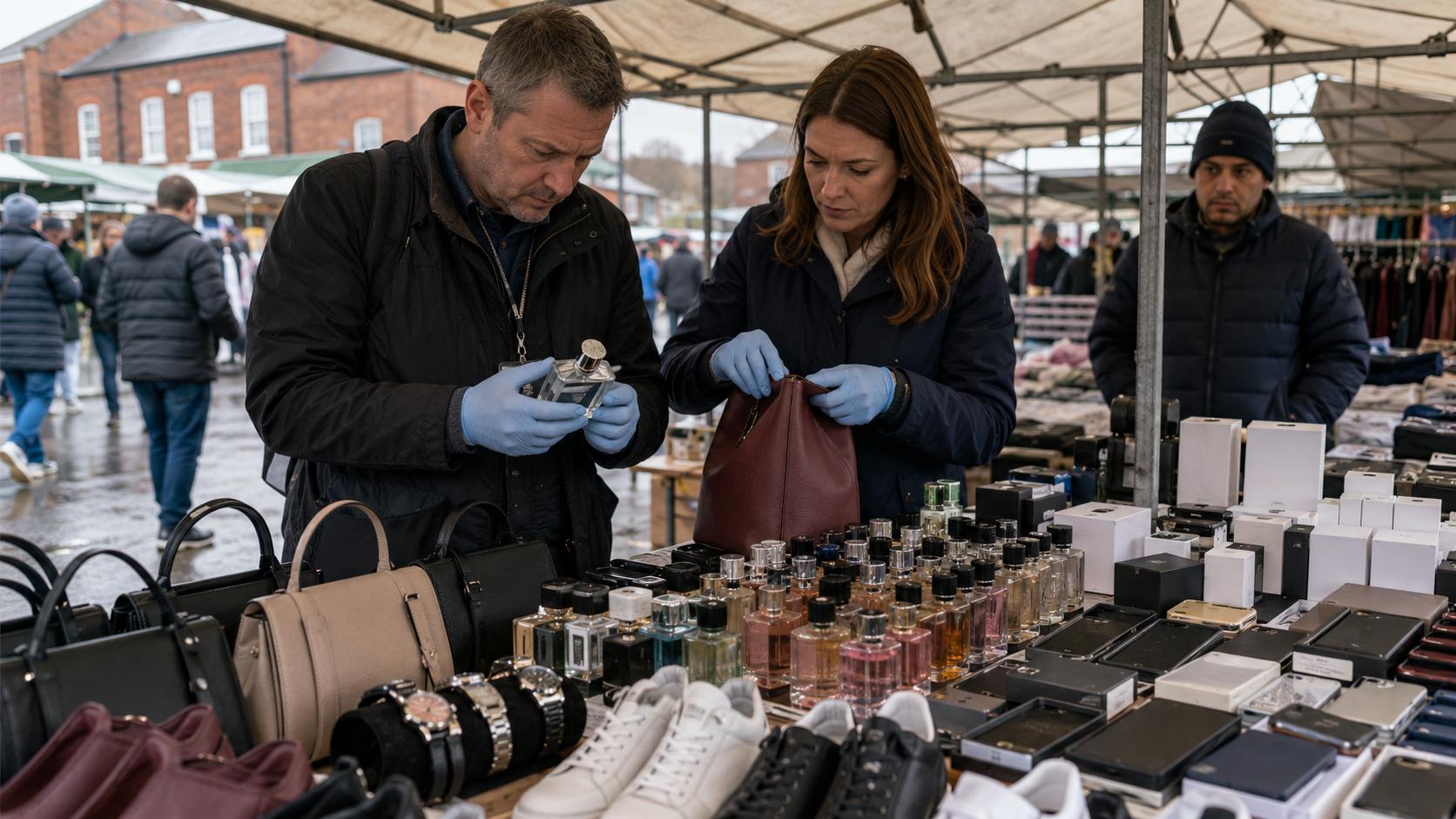
Counterfeit goods are often dismissed as harmless knock-offs, but the scale of the industry is staggering.
The OECD estimates that counterfeit products account for approximately £360 billion of global trade annually. Some forecasts suggest the wider market for counterfeit and pirated goods could approach £1.5 trillion by the end of the decade.
Counterfeiters no longer focus solely on luxury handbags and designer clothing. Fake pharmaceuticals, electrical products, automotive parts, cosmetics and children's toys are increasingly common.
The risks are substantial. Counterfeit medicines may contain dangerous ingredients, fake electronics can create fire hazards and counterfeit safety equipment may fail when needed most.
For Newcastle consumers, the growth of online shopping means counterfeit products can arrive directly at people's homes without them ever realising they are purchasing fake goods.
Legitimate businesses also suffer. Every counterfeit sale potentially represents lost revenue, reduced consumer confidence and unfair competition.
Money laundering keeps the criminal economy moving.
If organised crime generates trillions of pounds, those profits need to be hidden somewhere.
Money laundering is the process through which criminal proceeds are disguised to appear legitimate. Criminal organisations use complex networks of bank accounts, shell companies, property transactions, luxury goods and digital assets to move money through the financial system.
International organisations estimate that between two and five percent of global GDP is laundered every year. Based on current economic output, that could represent between £1.6 trillion and £4 trillion annually.
The UK remains a major focus for anti-money laundering investigations because of the size of its financial sector and property market. The National Crime Agency has repeatedly warned that British institutions remain attractive targets for international criminal groups seeking to clean illicit funds.
Money laundering rarely generates headlines like drug trafficking or cybercrime, but it is arguably one of the most important criminal activities because it enables every other illegal market to function.
The illegal arms trade fuels instability across the world.
Weapons trafficking remains one of the most dangerous organised crime sectors.
While estimates vary considerably, experts believe the illicit arms trade generates tens of billions of pounds annually. Illegal firearms are trafficked through international smuggling routes and often end up in the hands of organised crime groups, insurgents and violent criminal networks.
The UK has relatively strict firearms legislation compared with many countries, but law enforcement agencies continue to intercept attempts to import prohibited weapons.
The consequences of arms trafficking extend beyond crime statistics. Illegal weapons contribute to violence, political instability and conflict worldwide, creating ripple effects that often reach international markets and supply chains.
Maritime piracy still costs global trade billions.
Piracy may sound like a relic of history, but it remains a genuine concern for international shipping.
Modern pirates target commercial vessels, cargo ships and oil tankers in vulnerable regions. Although incidents have fallen from their peak in some areas, piracy continues to cost the shipping industry billions through security measures, insurance premiums and disrupted trade routes.
For Britain, an island nation heavily dependent on international trade, maritime security matters. Goods arriving through UK ports, including those serving northern England, rely on stable and secure shipping networks.
The Port of Tyne has long been an important part of the region's economy. While Newcastle itself is not threatened by piracy, disruptions to global trade can eventually affect supply chains, prices and economic activity.
Global smuggling networks connect every major criminal market.
Many organised crime sectors rely on the same transportation infrastructure.
Smuggling networks move drugs, counterfeit products, illegal tobacco, migrants, weapons and stolen goods through shared routes. Criminal groups frequently collaborate, creating highly sophisticated international logistics operations.
Law enforcement agencies often discover that dismantling one criminal network reveals links to multiple other activities. A drug trafficking investigation may uncover money laundering operations, human trafficking networks and counterfeit goods distribution systems.
The interconnected nature of organised crime makes it extremely resilient. Closing one route often results in criminals opening another.
Understanding the shadow economy.
One of the most misunderstood terms in economics is the shadow economy.
The shadow economy refers to economic activity that takes place outside official regulation, taxation or government reporting systems. This does not automatically mean criminal activity. Examples can include undeclared cash work, informal labour arrangements and unreported business transactions.
However, organised crime frequently uses shadow economy structures because they provide opportunities to hide income and avoid oversight.
Researchers estimate that the global shadow economy could be worth more than £8 trillion annually, representing a significant proportion of worldwide economic activity.
In the UK, tax authorities continue efforts to reduce undeclared income and improve transparency. While most participants in the shadow economy are not involved in organised crime, criminal groups often exploit the same gaps and weaknesses.
Why Newcastle businesses should care.
It is easy to assume that organised crime is primarily a problem for governments and police forces. Increasingly, that is no longer true.
Counterfeit products affect retailers. Cybercrime targets local companies. Money laundering investigations impact financial institutions. Human trafficking raises supply chain concerns. Fraud costs businesses billions every year.
Newcastle's economy has become more connected to global markets through technology, ecommerce and international trade. That connectivity creates opportunities for growth, but it also increases exposure to global criminal activity.
A cyberattack on a local company, a counterfeit product sold online or a fraud targeting a regional business may seem isolated. In reality, these incidents often form part of much larger criminal ecosystems operating across borders.
The criminal economy is becoming more sophisticated.
Perhaps the most concerning trend is how quickly organised crime adapts.
Artificial intelligence, cryptocurrency, encrypted communications and digital payment systems have all created new opportunities for criminal enterprises. Many organised crime groups now operate with levels of sophistication that resemble legitimate multinational businesses.
They invest in technology, recruit specialists, diversify revenue streams and adapt rapidly to changing regulations.
For governments, businesses and communities, combating organised crime is becoming increasingly complex. Yet understanding the scale of the challenge is an important first step.
The global criminal economy may be worth trillions of pounds, but its true cost cannot be measured purely in money. It is reflected in exploited workers, unsafe products, damaged businesses, lost tax revenues and communities affected by crime.
For Newcastle and the wider UK, the message is clear. Organised crime is not a distant international problem. It is an economic reality that increasingly touches every part of modern life.
Crime News
How Organised Crime Became One of the World's Biggest Businesses
Advertisement


Comments (0)
You must be logged in to post comments.
Don't have an account? Register here
No comments yet. Be the first to share your thoughts!