
Artificial intelligence is no longer a futuristic concept confined to science fiction films and technology conferences. It has quietly woven itself into everyday life, influencing how people shop, work, travel, communicate and even relax. From smartphones that predict what we want to type next to streaming services that recommend our next favourite show, AI has become an almost constant presence.
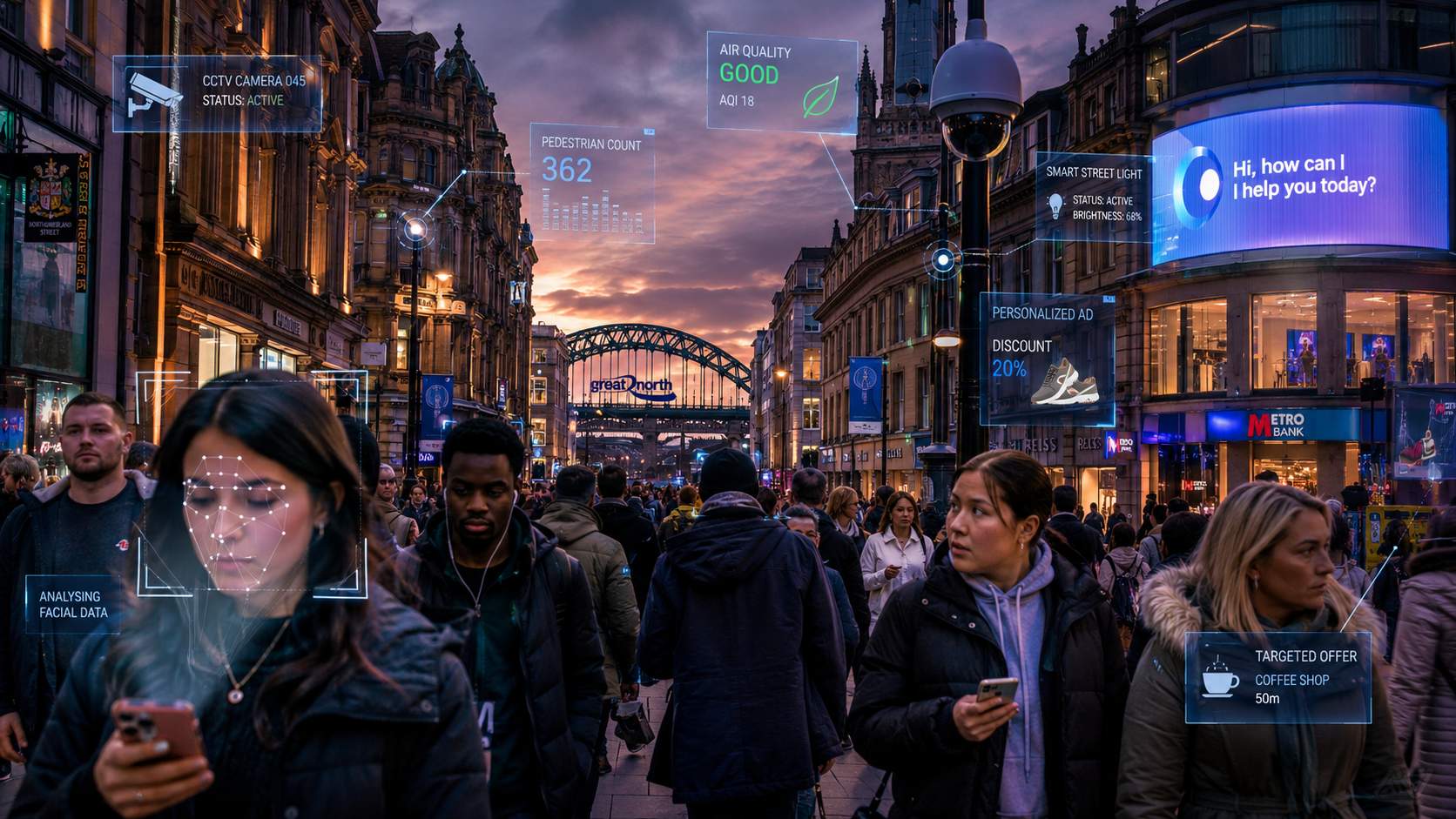
Yet as artificial intelligence becomes increasingly embedded in modern society, a growing question is being asked by people across Newcastle and the wider UK. Is AI making life easier, or is it becoming too intrusive?
The debate is no longer limited to technology experts. It is being discussed around dinner tables, in workplaces, in schools and across social media. While many welcome the convenience AI offers, others are becoming uneasy about how much information these systems collect and how deeply they are becoming involved in everyday decisions.
AI Has Become Part Of Daily Life.
Many people use AI without even realising it.
When someone unlocks their smartphone using facial recognition, receives a suggested route from a navigation app, shops online and sees personalised recommendations, or asks a virtual assistant a question, artificial intelligence is often working behind the scenes.
Recent UK research found that 73 per cent of people had used AI in their day-to-day lives during the previous month. Despite this widespread use, only 28 per cent felt confident in their ability to use AI tools effectively. The same survey found that privacy and data protection remain major concerns for consumers. More than six in ten people said keeping personal information safe while using AI was important.
That gap between usage and understanding is becoming one of the defining issues of the AI age.
Newcastle's Growing Technology Landscape.
Newcastle has emerged as one of the UK's most exciting technology hubs in recent years.
The city is home to a growing number of digital businesses, technology start-ups and innovation centres. Newcastle University and Northumbria University are both heavily involved in research related to artificial intelligence, data science and emerging technologies.
The region has also seen investment in digital infrastructure and smart city initiatives designed to improve transport, public services and economic growth.
For many Newcastle residents, AI is already influencing everyday experiences. Whether it is using contactless payment systems powered by fraud detection algorithms, interacting with customer service chatbots or relying on AI-assisted healthcare services, the technology is becoming increasingly difficult to avoid.
This rapid adoption has brought economic opportunities to the region, but it has also raised concerns about privacy, transparency and accountability.
The Convenience Factor.
Supporters of artificial intelligence argue that much of the criticism overlooks the enormous benefits AI has delivered.
AI-powered navigation systems help drivers avoid congestion. Medical systems can assist doctors in identifying illnesses more quickly. Businesses use AI tools to improve efficiency, while consumers enjoy faster services and personalised experiences.
Research suggests AI adoption is accelerating rapidly. More than 20 million people in the UK used AI tools during 2025, representing significant growth compared with previous years. Younger generations are leading the way, with 63 per cent of people aged between 15 and 24 having used AI tools during a single month.
Many Newcastle businesses have embraced these tools to save time and improve productivity. Local firms increasingly use AI for customer support, marketing, scheduling and administrative tasks.
For busy households, the appeal is obvious. AI can help manage calendars, organise shopping lists and even control heating systems to reduce energy costs.
Are We Sharing Too Much Information?
Despite the advantages, privacy concerns continue to grow.
Every interaction with AI generates data. Smart speakers record voice commands. Search engines analyse questions. Shopping platforms track browsing habits. Fitness apps monitor health data.
Many consumers are unaware of how much information is being collected or how it is ultimately used.
This concern is reflected in national surveys. Research shows that privacy and security remain among the biggest public concerns surrounding AI adoption. Many people support innovation but want stronger safeguards regarding how personal data is collected, stored and shared.
In Newcastle, as in many cities, residents are becoming more aware of digital privacy issues. Discussions around surveillance technology, facial recognition and data collection have become increasingly common as artificial intelligence expands into both public and private spaces.
AI Is Influencing What We See Online.
One of the most significant ways AI affects daily life is through content recommendations.
Social media feeds, news websites, video platforms and online retailers all use algorithms designed to predict what users want to see next.
While these systems can improve user experiences, critics argue they also shape opinions, behaviours and purchasing decisions in ways many people do not fully understand.
AI determines which posts appear first, which advertisements are shown and even which news stories gain visibility.
For Newcastle residents following local news, community groups or regional events online, AI increasingly decides what information reaches them first.
Some experts worry this can create digital echo chambers where users are repeatedly exposed to similar viewpoints rather than a broad range of perspectives.
The Workplace Transformation.
Artificial intelligence is also reshaping workplaces across the UK.
Recent research found that 84 per cent of knowledge workers now use AI in some form, while 71 per cent say it helps them work faster.
Businesses across Newcastle are increasingly adopting AI tools to improve efficiency and reduce repetitive workloads.
However, concerns about job security remain.
Recent reports suggest AI is being cited more frequently as a factor in organisational restructuring and workforce reductions. At the same time, many employers argue AI works best as a tool that supports employees rather than replacing them entirely.
The reality appears more complex than either side of the debate often suggests.
Some jobs are changing rapidly, while entirely new roles focused on AI management, training and oversight are emerging.
The Rise Of AI In Public Services.
Artificial intelligence is also finding its way into public services.
Healthcare providers increasingly use AI to assist with diagnosis and administrative tasks. Local authorities are exploring ways to use technology to improve efficiency and reduce costs.
Research from the Alan Turing Institute suggests AI could play a significant role in improving productivity across public sector organisations.
For Newcastle residents, this could eventually mean faster access to services, shorter waiting times and more efficient public administration.
Yet critics argue that increased reliance on automated systems must be carefully monitored to ensure human oversight remains in place.
Why Public Trust Matters.
Perhaps the biggest challenge facing AI developers is trust.
People are often willing to embrace new technology when they understand how it works and believe it serves their interests.
Problems emerge when systems appear opaque or when users feel decisions are being made without sufficient transparency.
Surveys consistently show that many people remain uncertain about how AI works despite using it regularly. Public confidence often lags behind technological development.
For Newcastle businesses, public bodies and technology providers, building trust may become just as important as developing new AI capabilities.
Clear explanations, robust privacy protections and ethical safeguards could determine whether consumers continue embracing AI or become increasingly resistant to its expansion.
Where The Debate Goes Next.
Artificial intelligence is unlikely to disappear from everyday life. In fact, most experts believe its presence will continue growing over the coming years.
The real question is not whether AI will become more powerful, but how society chooses to manage its influence.
Newcastle provides an interesting example of this balancing act. The city is embracing innovation and technological growth while also reflecting wider public concerns about privacy, surveillance and the role of automation in modern life.
For many residents, AI has already become a useful part of everyday routines. For others, the speed of change raises uncomfortable questions about how much control technology companies and algorithms should have over daily experiences.
The challenge for policymakers, businesses and consumers alike will be finding the right balance between convenience and privacy, innovation and accountability, progress and trust.
As AI becomes more deeply integrated into society, that conversation is only just beginning.
Tell us your thoughts.
Do you think AI is making life easier in Newcastle, or is technology becoming too intrusive in our daily routines?
Tech News
Is Artificial Intelligence Becoming Too Personal for Comfort?
Advertisement





Comments (0)
You must be logged in to post comments.
Don't have an account? Register here
No comments yet. Be the first to share your thoughts!