
Whether tracking dangerous suspects through woodland, searching for vulnerable missing people or uncovering hidden drugs inside a Newcastle property, police dogs remain one of the most valuable crime-fighting tools available to Northumbria Police.
While many people picture a German Shepherd chasing fleeing offenders, today's police dog unit is far more diverse. Specialist detection dogs can locate firearms, explosives, cash, electronic devices and even tiny memory cards hidden inside homes or vehicles.
Across Newcastle and the wider North East, these highly trained dogs support officers every day, often providing evidence that would otherwise remain hidden.
According to the latest Independent Dog Welfare Visitors Scheme report, Northumbria Police currently has 67 police dogs, including 17 puppies in training, covering five operational disciplines across the force.
More than just chasing criminals.
General Purpose Dogs are the animals most people recognise.
Usually German Shepherds or Belgian Malinois, these dogs are trained to pursue suspects, search buildings, track people across long distances and protect officers during dangerous incidents.
Their sense of smell is estimated to be up to 100,000 times more sensitive than a human's, allowing them to follow scent trails that people would never detect. This ability regularly helps officers locate suspects who have fled into woodland, industrial estates or open countryside after committing offences.
Northumbria Police handlers are frequently deployed to assist with burglaries, robberies, violent offences, vehicle thefts and searches for high-risk missing people, particularly where every minute counts.
Specialist dogs tackle hidden crime.
Not every police dog is trained to detain offenders.
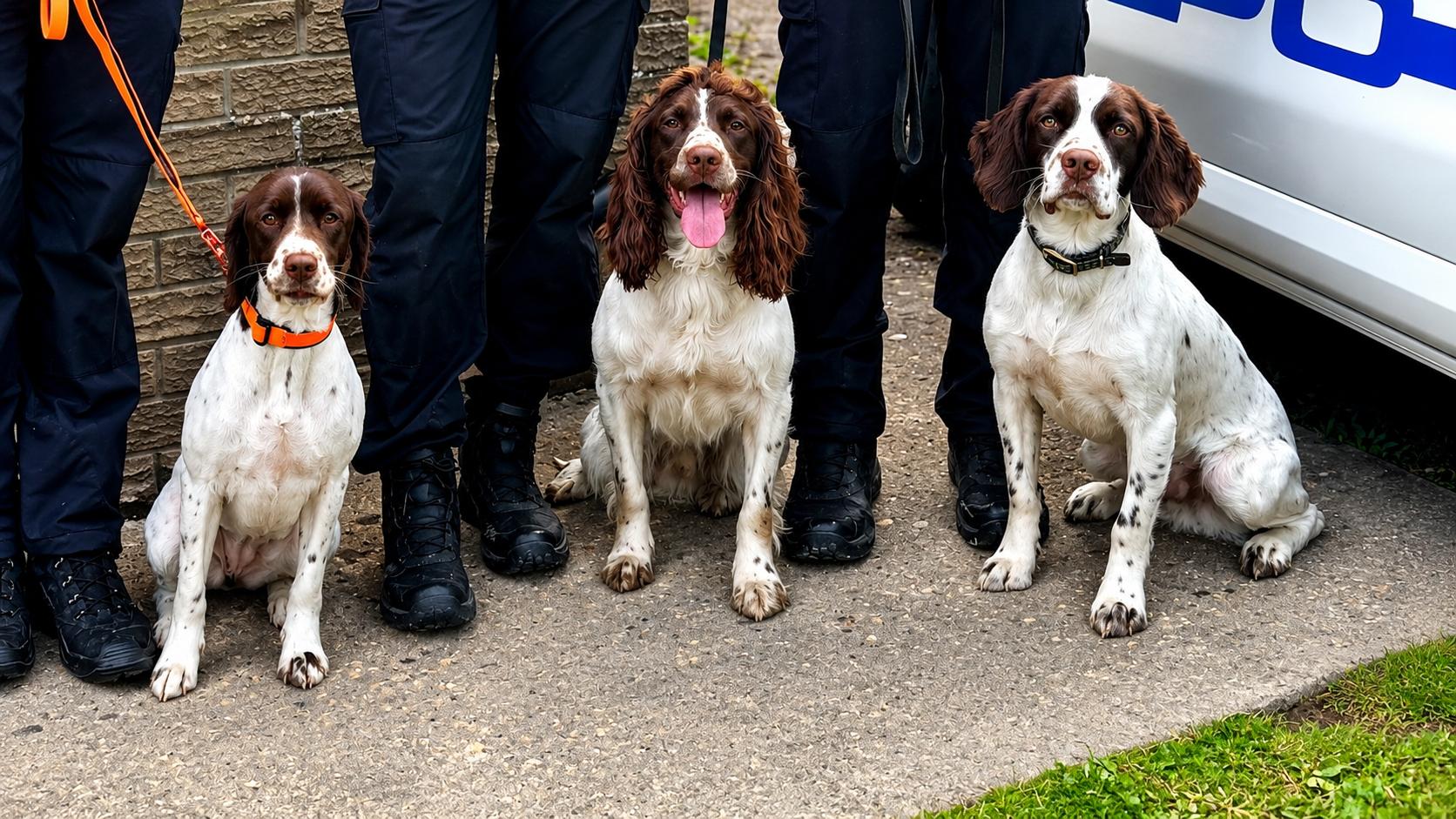
Detection dogs play an equally important role, quietly searching buildings, vehicles, warehouses and public spaces for items linked to criminal investigations.
Northumbria Police currently operates specialist dogs trained to detect:
Illegal drugs.
Firearms and weapons.
Large quantities of cash linked to organised crime.
Explosives.
Forensic evidence.
Digital media including mobile phones, SIM cards, USB drives and memory cards.
Digital detection dogs are among the most remarkable members of the unit.
Using scent rather than technology, they can locate tiny electronic storage devices hidden beneath floorboards, inside furniture or even buried in gardens. These devices can contain crucial evidence relating to child exploitation, fraud, organised crime or terrorism investigations.
Which breeds make the best police dogs?
Different breeds are chosen depending on the job they are expected to perform.
German Shepherds remain one of Britain's best-known police dogs because of their intelligence, strength and ability to combine tracking with suspect apprehension.
Belgian Malinois have become increasingly popular thanks to their speed, stamina and agility. Their athletic build makes them particularly effective in firearms support operations and high-risk searches.
Springer Spaniels and Cocker Spaniels are widely used as detection dogs because they possess exceptional scenting ability and an energetic desire to search.
Labradors are also commonly used for explosives and firearms detection due to their calm temperament and outstanding concentration in busy public environments.
Each breed brings different strengths, allowing police forces to match dogs with specific operational roles.
Training takes months before deployment.
Police dogs do not become operational overnight.
Training usually begins while dogs are still young, with puppies introduced to obedience, confidence building and environmental exposure before progressing to specialist work.
General Purpose Dogs receive intensive training covering tracking, searching, suspect detention, obedience and handler protection.
Detection dogs spend hundreds of hours learning to recognise specific scents before being tested in increasingly difficult environments including shopping centres, vehicles, warehouses, schools and transport hubs.
Handlers also undergo extensive specialist training because success depends as much on the partnership between officer and dog as the dog's abilities.
Northumbria Police describes the relationship between handler and dog as one built on complete trust, with many officers living alongside their police dogs outside working hours.
Supporting everything from missing people to organised crime.
Although dramatic arrests often receive media attention, many deployments never make the headlines.
Police dogs are routinely used to locate vulnerable missing children, elderly people with dementia and individuals experiencing mental health crises.
Detection dogs also support warrants targeting organised crime groups involved in drug trafficking, counterfeit goods, illegal tobacco, firearms offences and cash laundering.
During public events across Newcastle and Sunderland, explosives dogs may quietly search venues before large crowds arrive, helping keep visitors safe without attracting attention.
Welfare remains a priority.
Police dogs are treated as operational colleagues rather than simply equipment.
The latest welfare report shows independent volunteers completed 23 welfare visits between April 2024 and March 2025, carrying out 142 separate dog welfare checks. Every operational dog receives annual veterinary examinations, while kennels, transport vehicles and training facilities are independently inspected.
The report also highlights ongoing investment including improved kennel facilities, replacement vehicle matting, protective canine boots and body armour for operational dogs.
When dogs retire because of age or injury, many remain with their handlers, who often adopt them as family pets after years of working together.
Technology has not replaced police dogs.
With drones, thermal imaging cameras and artificial intelligence becoming increasingly common in policing, some people assume police dogs are becoming less important.
In reality, technology has enhanced rather than replaced their role.
A drone may identify where a suspect is hiding, but a police dog can safely locate, pursue and detain them.
Likewise, forensic software can analyse mobile phones, but digital detection dogs are often the reason those hidden devices are found in the first place.
Across Newcastle and the wider North East, police dogs continue proving that one of policing's oldest specialist units remains among its most effective.
As organised crime evolves and criminals become more sophisticated, Northumbria Police's four-legged officers are adapting alongside them, helping protect communities every day through skills that no machine has yet been able to replicate.
Join the discussion.
Have you ever seen Northumbria Police dogs in action around Newcastle or the North East?
Local News
Meet the Dogs Fighting Crime Across the North East
Advertisement




Comments (0)
You must be logged in to post comments.
Don't have an account? Register here
No comments yet. Be the first to share your thoughts!