
Among the many traditional treats of the North East, few have a name as charming as the singin' hinny. This rich, buttery griddle cake, studded with currants and cooked on a hot bakestone, has been a beloved part of Northumbrian baking for generations. With its delightful name and its comforting, old-fashioned appeal, the singin' hinny is a wonderful slice of regional food heritage.
A Traditional Griddle Cake.
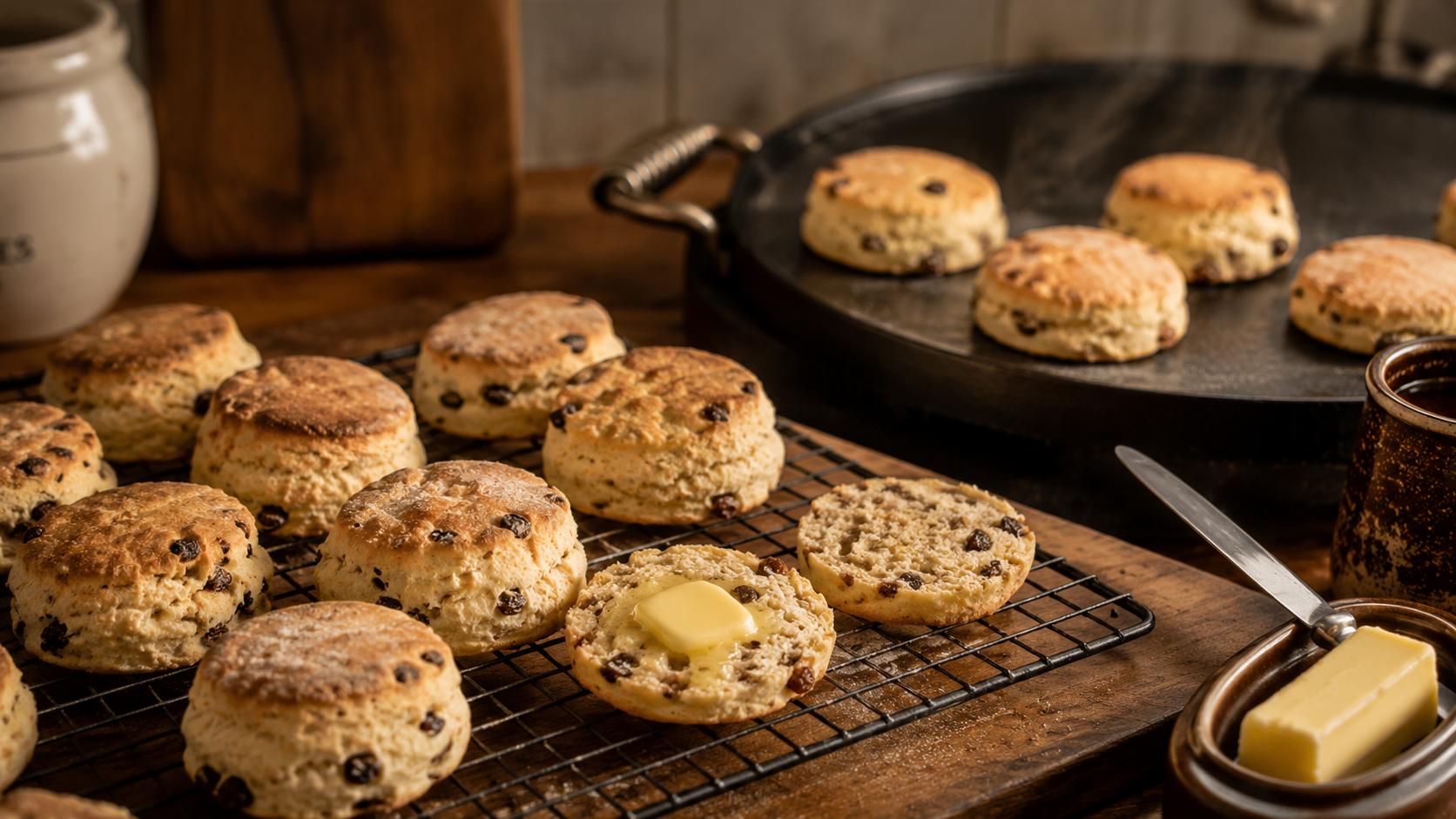
A singin' hinny is a type of griddle cake, made from a simple dough of flour, butter or lard, currants, a little sugar and milk, sometimes enriched with ground rice for texture. Rather than being baked in an oven, it is cooked on a griddle or bakestone over heat, which gives it a characteristic golden, slightly crisp surface and a soft, rich interior. Traditionally it is made as one large round cake, then cut into wedges, split open and spread generously with butter while still warm. The result is somewhere between a scone and a teacake, but with a character all its own.
The Story Behind the Name.
The name singin' hinny is one of the most delightful in British baking, and it comes from the cake itself. As the dough cooks on the hot griddle, the butter and fat within it begin to sizzle and hiss, making a sound rather like singing. The hinny part comes from the North East dialect, where hinny is a warm, affectionate term of endearment, similar to honey or dear. Put together, the name conjures an image of a cherished treat singing away on the griddle, ready to be shared with loved ones. It is said that hungry children waiting for the cake to cook would ask if it was ready, only to be told it was still just singing, not yet done.
A Food for Special Occasions.
Singin' hinnies were traditionally associated with gatherings, celebrations and times when family and friends came together. Making a large griddle cake to slice and share was a natural part of hospitality, and the cakes often featured at birthdays, get-togethers and special teas. There is something inherently sociable about a singin' hinny, a treat designed to be cut into wedges and passed around a warm kitchen, eaten while still fresh and buttery. That association with togetherness and welcome is a big part of the cake's enduring charm, and it reflects the warmth of the communities that created it.
Simple, Honest Ingredients.
Like so many traditional North East foods, the singin' hinny is built on simple, affordable, store-cupboard ingredients. Flour, fat, currants and milk were items most households could keep to hand, and the griddle method meant a cake could be made without a hot oven, which was both economical and practical. This made the singin' hinny an accessible everyday treat as well as a celebratory one, a small luxury that did not require great expense. That practicality, combined with genuine deliciousness, is exactly the sort of thing that earns a recipe a permanent place in a region's food traditions.
How to Enjoy a Singin' Hinny.
The classic way to eat a singin' hinny is the simplest: cut a warm wedge, split it open and spread it thickly with good butter, allowing it to melt into the soft, currant-studded cake. Served fresh from the griddle with a pot of tea, it makes a comforting and old-fashioned treat that feels like a direct link to the kitchens of the past. Some people enjoy it with a little jam as well, though purists insist that butter alone is all a good singin' hinny needs. However it is served, it is best eaten freshly made, while the magic of that warm, just-cooked texture is at its finest.
Keeping the Tradition Alive.
Although singin' hinnies are perhaps less common on bakery shelves than stotties or pease pudding, they remain a cherished part of North East baking, lovingly made in home kitchens and championed by those keen to keep regional traditions alive. Their wonderful name alone tends to spark curiosity and affection, drawing new generations to discover this old Northumbrian treat. In an age of mass-produced cakes and pastries, there is real pleasure in something made simply, on a griddle, exactly as it has been for many years.
The singin' hinny is a perfect little emblem of North East food culture: warm, welcoming, unpretentious and rich in both flavour and history. To make one, and to hear it gently singing on the griddle, is to take part in a tradition that has brought comfort and pleasure to the region's kitchens for a very long time.
A Cake Tied to Childhood.
For many people in the North East, singin' hinnies are bound up with warm memories of childhood and family kitchens. The very name tends to delight children, and the sight and sound of the cake sizzling away on the griddle has long been part of the anticipation, a small piece of kitchen theatre before the treat is finally ready. Recipes were often handed down through families, with grandmothers and mothers passing on their own particular methods and proportions, so that each household's singin' hinnies had their own subtle character. This sense of inheritance gives the cake a special place in the affections of those who grew up with it. Even today, the making of singin' hinnies can feel like an act of connection with earlier generations, a way of keeping a cherished family tradition alive. In a world of convenience foods and shop-bought cakes, there is real value in something made by hand, on a griddle, exactly as it has been for so long, and shared warm among the people you love.
Have your say.
Let us know what you think in the comments, as we read every single one, and tell us if singin' hinnies were ever a feature of your family kitchen.
Did your family ever make singin' hinnies on the griddle?
Food & Drink News
Singin' Hinnies: Northumberland's Griddle Cake
Discover singin' hinnies, the Northumbrian griddle cake whose sizzling name and buttery, currant-studded charm have delighted families for generations.
Advertisement

Comments (0)
You must be logged in to post comments.
Don't have an account? Register here
No comments yet. Be the first to share your thoughts!