
The 2026 FIFA World Cup promises to be remembered for more than just goals, trophies and unforgettable moments. As football prepares for its biggest tournament ever, technology is set to play a larger role than at any previous World Cup.
Hosted across the United States, Canada and Mexico, the tournament will feature 48 teams and 104 matches, making it the largest World Cup in history. Alongside the expanded format comes a new generation of officiating technology, enhanced Video Assistant Referee systems, artificial intelligence tools and advanced player tracking systems that could fundamentally change how football is played, analysed and understood.
For Newcastle United supporters, the evolution of technology at the World Cup carries extra significance. With several Newcastle players expected to represent their national teams, and with St James' Park regularly at the centre of Premier League VAR debates, the tournament could provide a glimpse into football's future both internationally and domestically.
Why Technology Is Becoming Central To Modern Football.
Technology's influence on football has grown dramatically over the last decade.
Goal-line technology was once viewed as revolutionary. Today, it is accepted as a routine part of the game. VAR followed a similar path. Introduced at the 2018 World Cup in Russia, it generated controversy but gradually became a fixture in elite competitions around the world.
Now FIFA is taking the next step.
Officials believe the latest generation of football technology can reduce delays, improve accuracy and provide greater transparency for supporters watching in stadiums and at home. The goal is simple. Allow matches to flow naturally while ensuring critical decisions are as accurate as possible.
As football becomes faster and more tactical, referees are increasingly relying on technology to help manage decisions that are impossible to judge perfectly with the naked eye.
The Evolution Of VAR At The World Cup.
VAR has already had a significant impact on football's biggest tournament.
During the 2022 FIFA World Cup in Qatar, video reviews played a major role in penalty decisions, red cards and offside calls. Analysis of all 64 matches showed 13 overturned decisions during the tournament, demonstrating how frequently the system influenced key moments.
Supporters remain divided over VAR's impact. Critics argue that lengthy delays damage the emotion of the sport, while supporters point to the increased accuracy of decision making.
FIFA's response has not been to abandon VAR but to improve it.
The organisation has spent the last four years refining systems designed to reduce review times and eliminate some of the most frustrating elements associated with the technology.
The 2026 World Cup will represent the most advanced version of VAR ever deployed.
Semi-Automated Offside Technology Takes Centre Stage.
One of the most important innovations at the 2026 World Cup will be enhanced semi-automated offside technology.
The system builds upon technology first introduced in Qatar but now includes more sophisticated artificial intelligence, improved player tracking and faster communication between officials. FIFA says assistant referees will receive instant alerts when clear offsides occur, allowing them to raise the flag sooner rather than waiting for lengthy phases of play to finish.
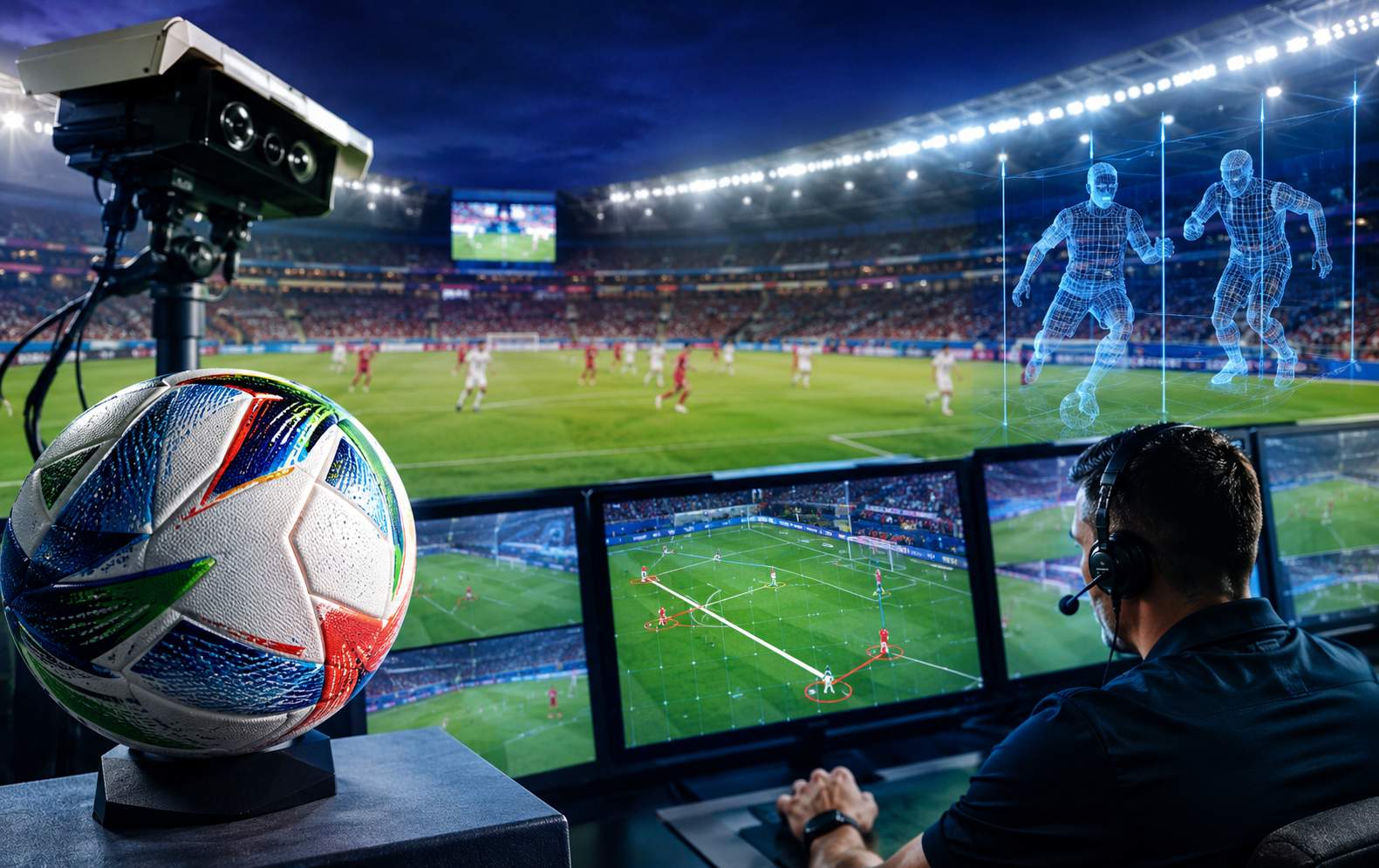
The technology uses multiple tracking cameras around the stadium and sensors within the match ball to monitor player positions and ball movement in real time. Some reports suggest the system can collect up to 150 million data points during a match, providing unprecedented levels of precision.
For fans frustrated by delayed offside decisions, this could represent one of the most welcome changes of the tournament.
Faster rulings mean fewer interruptions and less uncertainty during crucial moments.
AI Avatars Could Change How Fans Understand Decisions.
Perhaps the most fascinating innovation arriving at the 2026 World Cup involves artificial intelligence generated player avatars.
Every player participating in the tournament will undergo advanced scanning procedures to create realistic digital models. These AI-powered avatars will help officials track player movements more accurately while also providing television audiences with clearer visual explanations of controversial decisions.
Instead of relying on generic animated figures, broadcasts will show realistic player representations that mirror actual body shapes and dimensions.
FIFA believes this will improve public understanding of VAR decisions and increase confidence in the technology.
Whether supporters fully embrace these digital representations remains to be seen, but they are likely to become one of the talking points of the tournament.
A New Era Of Data And Match Analysis.
Technology at the 2026 World Cup will extend far beyond refereeing.
FIFA is also introducing advanced analytics platforms designed to help national teams gain deeper tactical insights. AI-powered systems will provide coaching staffs with detailed performance data, heat maps, positional trends and predictive analysis.
Historically, only football's richest nations could access cutting-edge analytical tools. FIFA's latest initiative aims to make advanced data available to all participating teams.
This could help level the playing field and allow smaller nations to compete more effectively against traditional powerhouses.
As clubs increasingly rely on data science for recruitment and tactical planning, international football is following the same path.
What Newcastle United Can Learn From The World Cup.
Newcastle United have become one of the Premier League's most ambitious clubs in terms of modern infrastructure and performance analysis.
The club has invested heavily in sports science, recruitment technology and data-led decision making since the arrival of the current ownership group.
For Newcastle supporters, the 2026 World Cup offers an opportunity to see how emerging technologies could eventually influence domestic football.
Many of the systems being tested and refined on the global stage eventually find their way into league competitions. Goal-line technology and VAR both followed this path.
If FIFA's enhanced offside systems prove successful, there is every chance similar approaches could become more common across Europe's top leagues in the coming years.
With Newcastle continuing to push for Champions League qualification and major honours, any improvements in officiating accuracy could have significant consequences for the club's future campaigns.
The Referee Camera Experiment.
Another innovation attracting attention ahead of the tournament is the increased use of referee body cameras.
These devices are designed to provide unique perspectives for broadcasters while also offering additional tools for match analysis and referee training.
The technology allows viewers to experience key moments directly from the referee's viewpoint, helping explain why certain decisions are made in real time.
For supporters who often question officiating calls, seeing the game through a referee's eyes could provide valuable context.
While body cameras are unlikely to eliminate controversy entirely, they may improve understanding between officials and fans.
Will Technology Remove Football's Controversies.
The short answer is probably not.
Football has always thrived on debate. Whether discussing penalties, red cards, offside decisions or tactical choices, disagreement remains part of the sport's appeal.
Technology can improve accuracy, but it cannot eliminate interpretation.
Even with advanced tracking systems and artificial intelligence, officials will still need to assess subjective situations involving fouls, handballs and player interference.
Some decisions will always generate discussion regardless of how much technology is involved.
What technology can do is reduce obvious errors and provide stronger evidence for critical calls.
That alone represents a major step forward.
The Balance Between Accuracy And Emotion.
One challenge facing FIFA is maintaining football's emotional connection while introducing increasingly sophisticated technology.
Supporters celebrate goals instinctively. Long delays for reviews can dilute those moments.
The success of the 2026 World Cup's technological innovations will depend largely on whether they improve accuracy without damaging the natural rhythm of matches.
FIFA appears aware of this concern. Much of the investment in semi-automated systems is focused on reducing decision times rather than simply increasing precision.
If officials can deliver near-instant rulings while maintaining confidence in the outcome, football may finally find the balance it has been searching for since VAR's introduction.
What The Future Could Look Like.
The 2026 World Cup is likely to become a testing ground for technologies that will shape football over the next decade.
Artificial intelligence, advanced tracking systems, automated decision support and immersive broadcasting experiences are all becoming increasingly important parts of the modern game.
For Newcastle United fans, the tournament provides a preview of football's future. Many of the innovations showcased across North America could eventually influence the Premier League, Champions League and domestic cup competitions.
While debates over VAR will undoubtedly continue, the direction of travel is clear.
Technology is no longer a supporting feature in football. It is becoming one of the sport's defining forces.
As the world's best players prepare to compete for football's greatest prize, the officials, analysts and technology teams behind the scenes may also play a crucial role in determining how the 2026 World Cup is remembered.
What do you think about the latest World Cup VAR technology and AI-driven officiating tools?
Tech News
The Technology Revolution Set to Dominate the 2026 World Cup
Advertisement





Comments (0)
You must be logged in to post comments.
Don't have an account? Register here
No comments yet. Be the first to share your thoughts!